
Healthcare providers often invest significant time and money in attracting patients, but inconsistent communication can weaken the patient journey after the first inquiry. Missed appointment reminders, delayed follow-ups, and unanswered questions can affect patient engagement and make it harder for healthcare teams to maintain relationships.
Healthcare marketing automation helps clinics, hospitals, and healthcare brands organize routine communication, follow up with inquiries, and deliver timely messages with less manual effort. Instead of relying entirely on staff to remember every task, healthcare teams can build workflows around important patient touchpoints.
For example, automation can help teams:
- Send appointment reminders at scheduled intervals.
- Follow up with patients who have made an inquiry.
- Share relevant educational content and service updates.
- Track communication and identify pending follow-up tasks.
The World Health Organization has reported that adherence to long-term therapy averages around 50% in developed countries, highlighting the challenges involved in maintaining ongoing treatment. Marketing automation cannot solve every adherence issue, but structured communication can help healthcare providers support patients more consistently.
What Is Healthcare Marketing Automation?
Healthcare marketing automation uses software and predefined workflows to manage repetitive marketing and patient communication tasks. It helps healthcare organizations send timely messages, organize inquiries, segment audiences, and monitor engagement across the patient journey.
For example, when someone submits an inquiry through a hospital website, an automated workflow can acknowledge the inquiry, notify the appropriate team, and schedule a follow-up task. Staff can then provide personalized assistance instead of managing every step manually.
How healthcare marketing automation works
A typical workflow follows four steps:
- Capture an inquiry: Collect information through a website form, campaign landing page, or another approved channel.
- Organize the contact: Record relevant information in a suitable customer relationship management (CRM) system.
- Trigger communication: Send an appropriate acknowledgment, reminder, or follow-up message based on the person’s action and communication preferences.
- Track the outcome: Monitor responses, completed follow-ups, appointment bookings, and other relevant metrics.
Marketing automation vs. traditional patient communication
Traditional communication often depends on staff manually sending messages, updating spreadsheets, and remembering when to contact each person. Automation introduces repeatable workflows that make these tasks easier to manage.
However, automation should support human interaction rather than replace it. Healthcare professionals must remain available for clinical questions, sensitive concerns, and situations that require individual judgment.
Why Patient Engagement Matters in Healthcare
Patient engagement involves helping people stay informed, communicate with healthcare providers, and complete appropriate next steps in their care journey. It begins when someone discovers a healthcare service and continues through inquiries, appointment scheduling, follow-up communication, and ongoing relationships.
Strong patient engagement can help healthcare organizations create a more consistent experience. It also gives staff better visibility into communication gaps that might otherwise go unnoticed.
Reducing missed appointments
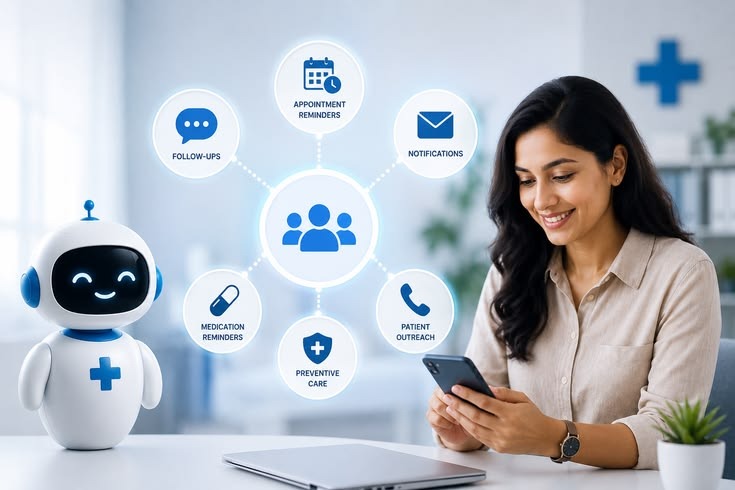
Patients may miss appointments because they forget the date, misunderstand preparation instructions, or struggle to reschedule. Automated appointment reminders can send timely notifications and provide clear instructions about how to confirm or change an appointment.
For example, a clinic can schedule a reminder several days before an appointment and another closer to the visit. If the patient requests a change, staff can follow up and help arrange a suitable time.
Improving patient follow-up and retention
Patient follow-up helps healthcare organizations maintain communication after an inquiry or appointment. A structured process ensures that staff can identify pending responses and contact people who have requested more information.
Useful follow-up activities include:
- Responding to new service inquiries.
- Checking whether a prospective patient needs help booking an appointment.
- Sending approved post-visit feedback requests.
- Sharing relevant educational resources.
- Directing questions that require clinical judgment to qualified healthcare professionals.
These activities can improve continuity of communication without making unsupported promises about clinical outcomes.
Building trust through consistent communication
Patients expect clear information, timely responses, and respectful communication. When healthcare organizations provide consistent updates and make it easy to contact the right team, they can create a more dependable patient experience.
Personalized communication also helps patients understand the next step without receiving unnecessary messages. Healthcare teams should always respect communication preferences and protect sensitive information.
Key Benefits of Healthcare Marketing Automation
Healthcare marketing automation helps organizations coordinate repetitive tasks and understand how people interact with their communication. Its value depends on the quality of the workflow, the relevance of the messages, and the team’s ability to respond when human assistance is needed.
Automated appointment reminders
Appointment reminders reduce reliance on manual calls and messages. Teams can schedule reminders in advance, include relevant booking information, and provide a clear way to confirm or reschedule.
Messages should contain only the information necessary for the purpose. Avoid including sensitive medical details in ordinary SMS or email notifications.
Timely patient follow-up
A healthcare automation workflow can create follow-up tasks when someone submits a form, requests a callback, or does not respond to an initial communication.
For example, a person who asks about a hospital’s cardiology services could receive an acknowledgment and a suitable next-step message. If they request a call, the system can notify the relevant team to respond.
This approach helps staff prioritize inquiries and reduces the chance that a request will be overlooked.
Personalized patient communication
Automation can organize contacts according to appropriate factors such as the service they asked about, their communication preferences, and their stage in the inquiry process.
This allows healthcare organizations to send more relevant information instead of sending the same message to everyone. Segmentation should follow applicable privacy requirements, consent rules, and organizational policies.
Better coordination between marketing and patient service teams
Marketing teams may generate inquiries through search campaigns, social media, websites, and other channels. Without a clear handover process, staff can struggle to determine who has responded and which inquiries still need attention.
Healthcare workflow automation can assign follow-up tasks, record communication outcomes, and provide visibility into pending requests. This helps marketing and patient service teams work from a more consistent process.
How to Automate Patient Follow-Up in Healthcare
A successful patient follow-up process starts with clear objectives, not simply with purchasing software. Healthcare organizations should identify where communication breaks down and build workflows that address those specific problems.
Step 1: Map the patient journey
Document the main stages through which a person interacts with your organization, from the initial inquiry to appointment booking and appropriate post-visit communication.
Identify where delays occur. For example, a clinic might receive website inquiries promptly but take too long to respond because staff manually distribute them between departments.
Step 2: Identify suitable communication touchpoints
Choose which interactions benefit from automation. Common examples include inquiry acknowledgments, appointment reminders, callback notifications, and feedback requests.
Not every communication should be automated. Clinical advice, urgent concerns, test-result discussions, and complex patient questions require the appropriate qualified staff.
Step 3: Create automated workflows
Define the trigger, message, timing, responsible team, and next action for each workflow.
| Workflow trigger | Automated action | Human follow-up |
| New website inquiry | Send an acknowledgment | Contact the person if requested |
| Upcoming appointment | Send a reminder | Help with rescheduling when needed |
| Callback request | Notify the responsible team | Complete the requested callback |
| Feedback submission | Record the response | Review concerns and escalate appropriately |
Start with a small number of workflows and test them before expanding. Check that messages reach the right recipients, that contact preferences are respected, and that staff can intervene when necessary.
Step 4: Track follow-up completion
Measure whether the workflow produces useful actions rather than counting messages sent alone.
Monitor indicators such as:
- Time taken to respond to inquiries.
- Percentage of inquiries receiving a follow-up.
- Appointment confirmation and rescheduling rates.
- Number of pending or overdue follow-up tasks.
- Patient feedback about communication.
Review these indicators regularly and adjust the workflow based on actual performance.
How Healthcare CRM Software Supports Patient Engagement
Healthcare CRM software helps teams organize inquiries, record interactions, and coordinate follow-up activities. When connected to suitable communication and scheduling tools, it can give staff a clearer view of each contact’s status.
Centralizing patient inquiries and communication
A centralized system can help healthcare organizations manage inquiries from different sources, including website forms, phone calls, and digital campaigns. Instead of maintaining separate records across multiple spreadsheets, teams can use a shared process to assign and track requests.
Access should be role-based, and the organization must ensure that its systems meet applicable privacy, security, and regulatory requirements.
Tracking interactions and follow-up tasks
CRM workflows can show whether a team has acknowledged an inquiry, completed a requested callback, or scheduled the next communication. Automated alerts can flag overdue tasks and help managers identify recurring bottlenecks.
A CRM should not replace an electronic medical record (EMR) or serve as an unrestricted repository for sensitive clinical information. Integrations and data access should follow the organization’s approved systems and privacy policies.
Best Practices for Healthcare Marketing Automation
Healthcare communication requires a careful balance between efficiency, privacy, and personal attention. Follow these practices when building automation workflows.
Personalize messages without over-communicating
Use relevant information to make messages helpful, but avoid sending repeated reminders that frustrate recipients. Set reasonable frequency limits and provide clear options for managing communication preferences.
Protect patient data and obtain appropriate consent
Healthcare organizations should use approved communication platforms, limit access to sensitive information, and follow applicable privacy laws and consent requirements. Avoid sharing confidential clinical details through unsecured channels.
In the United States, organizations subject to HIPAA must follow the applicable privacy and security requirements. Indian healthcare organizations should assess the laws and rules applicable to their operations rather than assume that one country’s requirements apply everywhere.
Keep human support available
Automation is useful for routine tasks, but patients still need access to people who can understand individual concerns. Establish escalation rules so that sensitive questions, complaints, and urgent issues reach the appropriate staff promptly.
Measure results and improve workflows
Review performance data to determine which messages help people complete the intended next step. Test message timing and clarity, check for workflow errors, and remove communications that no longer serve a useful purpose.
A successful program improves the quality of communication, not merely the number of automated messages delivered.
How D-Medva Helps Healthcare Providers Improve Patient Engagement
Healthcare organizations need more than individual campaigns to maintain consistent communication. They need a strategy that connects patient acquisition, inquiry management, follow-up, and performance tracking.
D-Medva supports healthcare brands with digital marketing and automation services designed around their business objectives. Its Automark service is relevant for organizations looking to streamline marketing activities and build more organized communication workflows.
With the right strategy, healthcare providers can work toward:
- Organizing inquiries generated through digital marketing campaigns.
- Improving follow-up processes for prospective patients.
- Coordinating communication across relevant channels.
- Monitoring campaign performance and identifying areas for improvement.
- Creating a more consistent experience from the first inquiry to the next appropriate step.
The right approach depends on each organization’s size, systems, patient journey, and operational requirements. Automation should complement the work of healthcare teams while maintaining appropriate privacy safeguards and human support.
Explore D-Medva to learn about its healthcare marketing services, or browse the D-Medva blog for more insights on healthcare marketing and digital growth.
Conclusion
Healthcare marketing automation helps healthcare providers manage communication more consistently, organize follow-up tasks, and reduce the manual effort involved in routine marketing activities. From automated appointment reminders to inquiry tracking and personalized communication, well-designed workflows can make the patient journey easier to manage.
However, successful automation requires more than sending scheduled messages. Healthcare organizations need clear workflows, relevant content, privacy safeguards, and a process for directing individual concerns to the right people. Regular performance reviews also help teams understand whether their communication is producing meaningful results.
For healthcare brands looking to improve patient engagement and organize their marketing processes, D-Medva can help develop a strategy that connects digital marketing with more efficient workflows. Explore the Automark service to learn how marketing automation can support your organization’s goals.
Frequently Asked Questions
What is healthcare marketing automation?
Healthcare marketing automation uses software and predefined workflows to manage routine marketing and communication tasks. Examples include inquiry acknowledgments, appointment reminders, follow-up messages, and campaign performance tracking.
How does healthcare marketing automation improve patient engagement?
It helps healthcare providers communicate more consistently, respond to inquiries, send timely reminders, and share relevant information. Personalized workflows can make it easier for people to understand and complete the next step in their journey.
How can hospitals automate patient follow-up?
Hospitals can map their patient journey, identify suitable follow-up points, configure automated workflows, assign tasks to the appropriate teams, and monitor completion rates. Clinical questions and sensitive concerns should still reach qualified staff.
What tasks can healthcare automation handle?
Depending on the systems and workflows in place, healthcare automation can support appointment reminders, inquiry acknowledgment, callback notifications, feedback collection, marketing campaign management, and follow-up task tracking.
Is healthcare marketing automation suitable for small clinics?
Yes. Small clinics can begin with simple workflows, such as appointment reminders and inquiry follow-ups, then expand as their needs grow. They should select tools that fit their budget, staffing, and privacy requirements.
How does healthcare CRM software help manage patient communication?
Healthcare CRM software can centralize inquiry records, track communication history, assign follow-up tasks, and help teams identify pending requests. Any use involving sensitive health information requires appropriate access controls and privacy safeguards.
