
Patients interact with hospitals through websites, mobile applications, social media, email, WhatsApp and physical visits. When these channels operate independently, communication gaps, missed appointments and inconsistent experiences can occur.
Omnichannel patient engagement connects these interactions through a coordinated communication strategy. By integrating digital platforms, patient data management and healthcare marketing automation, hospitals can deliver relevant information throughout the patient journey.
An effective strategy helps hospitals improve communication, simplify appointment management, personalise interactions and strengthen patient relationships.
What Is Omnichannel Patient Engagement in Healthcare?
Omnichannel patient engagement is an integrated approach that connects different communication channels to provide patients with a consistent experience.
For example, a patient may discover a hospital through Google, explore its website, book an appointment online and receive an SMS confirmation. After consultation, the hospital can share relevant follow-up information through an appropriate communication channel.
The objective is to connect these interactions instead of managing each platform separately.
Omnichannel vs. Multichannel Patient Engagement
Multichannel communication uses different platforms independently, while omnichannel communication connects them to create a coordinated patient experience.
For example, sending appointment reminders through SMS and handling enquiries through email represents multichannel communication. Connecting these interactions through integrated systems represents an omnichannel approach.
Why Hospitals Need an Omnichannel Patient Engagement Strategy
Connected communication helps hospitals improve the patient experience and manage interactions more effectively.
Improves Patient Experience: Patients can access hospital information, schedule appointments and receive updates through convenient channels.
Maintains Consistent Communication: Coordinated messages help patients receive accurate appointment details, reminders and follow-up information.
Supports Care Coordination: Connected systems help authorised teams manage administrative interactions across departments.
Strengthens Patient Relationships: Relevant communication and timely follow-ups encourage continued engagement with hospital services.
Key Channels Used in Omnichannel Patient Engagement
Hospitals can connect multiple communication channels based on patient preferences and operational requirements.
Hospital Websites and Patient Portals: Provide information about doctors, departments, treatments, appointments and medical records.
Email and SMS: Support appointment confirmations, reminders, administrative updates and health awareness communication.
WhatsApp and Mobile Applications: Make routine enquiries, directions and appointment communication more convenient through approved platforms.
Social Media and Digital Advertising: Help hospitals share health information, promote services and reach relevant audiences.
Telehealth Platforms: Enable remote consultations and support communication before and after appointments.
7 Effective Omnichannel Patient Engagement Strategies
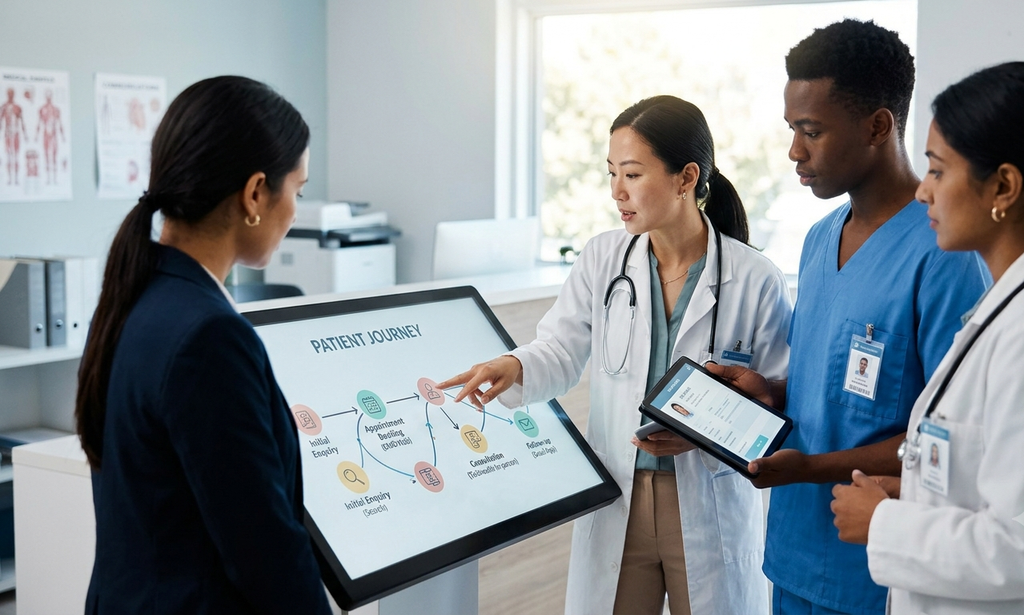
Map the Complete Patient Journey
Understand how patients discover, evaluate and access healthcare services.
The patient journey generally includes awareness, consideration, appointment booking, consultation, follow-up and continued engagement.
Mapping these stages helps hospitals identify communication gaps and improve the overall patient experience.
Integrate Patient Data Across Channels
Hospitals should connect relevant systems, including CRM software, appointment platforms, patient portals and marketing automation tools.
Patient data integration helps authorised teams understand previous interactions and maintain communication continuity. Appropriate consent, access controls and security measures are essential.
Personalise Patient Communication
Hospitals can make communication more relevant using patient preferences, appointment details and consented interactions.
Examples include appointment reminders, department updates, health awareness information and follow-up messages.
Automate Appointments and Follow-Ups
Healthcare marketing automation helps hospitals manage repetitive communication tasks.
Automated workflows can send appointment confirmations, consultation reminders and appropriate follow-up messages.
According to ONC research, 57% of individuals accessed their online medical records in 2022, compared with 38% in 2020. This highlights the growing importance of digital access in patient engagement.
Maintain Consistent Communication
Doctor profiles, department information, consultation availability and contact details should remain accurate across websites, social media and communication platforms.
Consistent information prevents confusion and improves patient confidence.
Collect and Analyse Patient Feedback
Hospitals can use surveys and post-consultation feedback to understand patient expectations and identify communication problems.
Regular analysis helps improve service accessibility and patient satisfaction.
Monitor Engagement Performance
Hospitals should track appointment enquiries, completed bookings, website interactions, communication response rates, patient satisfaction and retention trends.
These indicators help identify which channels contribute to better patient engagement.
How Healthcare Marketing Automation Improves Patient Engagement
Managing communication manually across multiple platforms can increase administrative workloads.
Healthcare marketing automation helps hospitals organise repetitive tasks through predefined workflows.
Common applications include:
- Appointment reminders: Send confirmations and reminders before consultations.
- Patient follow-ups: Share relevant administrative updates after appointments.
- Health education: Distribute preventive healthcare information and awareness content.
- Re-engagement campaigns: Communicate with interested patients based on their preferences and consent.
Automation should support healthcare teams rather than replace human interaction or clinical judgement.
Role of Patient Data Integration in Omnichannel Healthcare
Patient data integration connects relevant information from different communication and management systems.
When information remains scattered across platforms, hospitals may struggle to understand previous interactions and maintain consistent communication.
Understanding Consumer Data Platforms (CDPs)
A Consumer Data Platform (CDP) collects and organises customer information from multiple sources to create a unified profile.
In healthcare, CDP capabilities can help marketing teams understand consented website interactions, appointment enquiries and communication preferences.
CDP in Healthcare and Data Privacy
CDP in healthcare can support coordinated patient engagement when implemented with appropriate safeguards.
Hospitals must evaluate data security, consent management, access restrictions and applicable regulations before integrating patient information.
In India, healthcare organisations should consider the Digital Personal Data Protection Act, 2023, and applicable rules and sector-specific requirements.
Common Challenges in Implementing Omnichannel Patient Engagement
Hospitals may face several challenges when connecting communication systems.
- Fragmented patient data: Information remains distributed across different platforms.
- Disconnected systems: Communication channels may not share relevant information.
- Privacy concerns: Sensitive patient information requires appropriate protection.
- Technology integration: Legacy software may create compatibility issues.
- Inconsistent communication: Different departments may provide conflicting information.
A phased implementation strategy, clear data governance and appropriate technology integration can help address these challenges.
How to Measure Omnichannel Patient Engagement
Hospitals should monitor relevant KPIs to evaluate communication and marketing performance.
| KPI | What It Measures |
| Patient engagement rate | Interactions across communication channels |
| Appointment conversion rate | Enquiries converted into bookings |
| Appointment attendance rate | Patients attending scheduled consultations |
| Patient satisfaction | Feedback about patient experience |
| Follow-up response rate | Responses to follow-up messages |
| Patient retention | Continued engagement with hospital services |
| Campaign conversion rate | Actions generated through marketing campaigns |
Regular performance reviews help hospitals identify improvement opportunities and optimise communication strategies.
Frequently Asked Questions
What is omnichannel patient engagement?
Omnichannel patient engagement connects websites, email, SMS, mobile applications and other communication platforms to provide patients with a consistent experience.
Why is omnichannel patient engagement important in healthcare?
It improves communication, patient convenience, administrative coordination and relationships between hospitals and patients.
What is the difference between multichannel and omnichannel healthcare marketing?
Multichannel marketing uses several independent communication platforms, whereas omnichannel marketing connects them to create a coordinated patient experience.
How does healthcare marketing automation improve patient engagement?
It automates appointment reminders, follow-ups, health awareness campaigns and repetitive communication tasks.
What is a consumer data platform in healthcare?
A CDP collects and organises information from different interaction channels, helping healthcare organisations understand engagement and improve marketing communication while maintaining privacy safeguards.
How can hospitals measure patient engagement?
Hospitals can track appointment conversions, website interactions, follow-up responses, patient satisfaction and retention.
Conclusion: Build Better Healthcare Experiences Through Omnichannel Patient Engagement
Omnichannel patient engagement helps hospitals create consistent communication throughout the patient journey. By connecting digital channels, integrating relevant data and implementing healthcare marketing automation, healthcare organisations can improve patient experiences and strengthen relationships.
Successful implementation requires a clear strategy, suitable technology and strong data privacy practices.
D-Medva helps healthcare organisations strengthen their digital presence through healthcare marketing, marketing automation, branding and digital communication strategies.
Explore D-Medva’s healthcare marketing solutions to improve your hospital’s digital communication and patient engagement strategy.
